
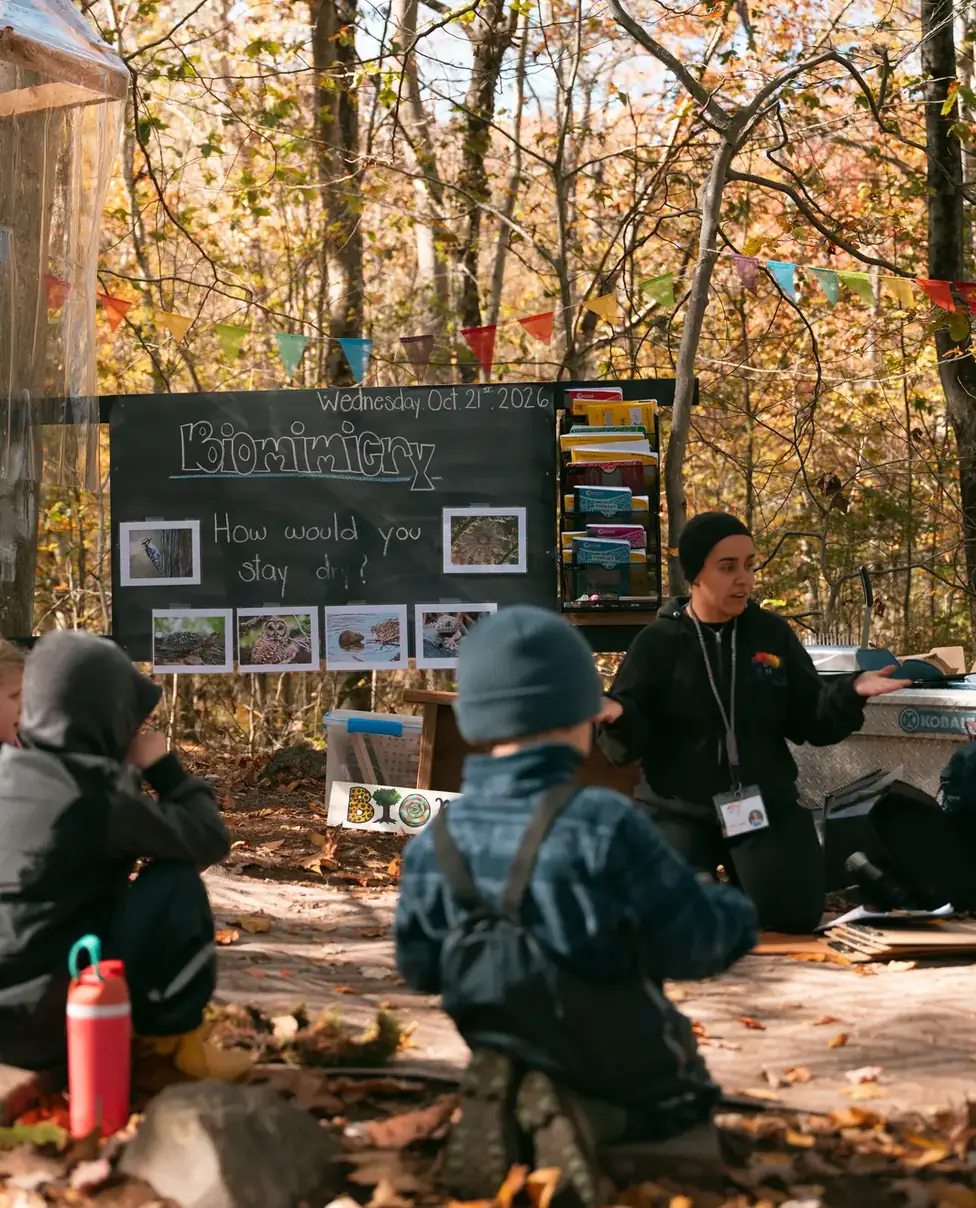
The outdoor classroom
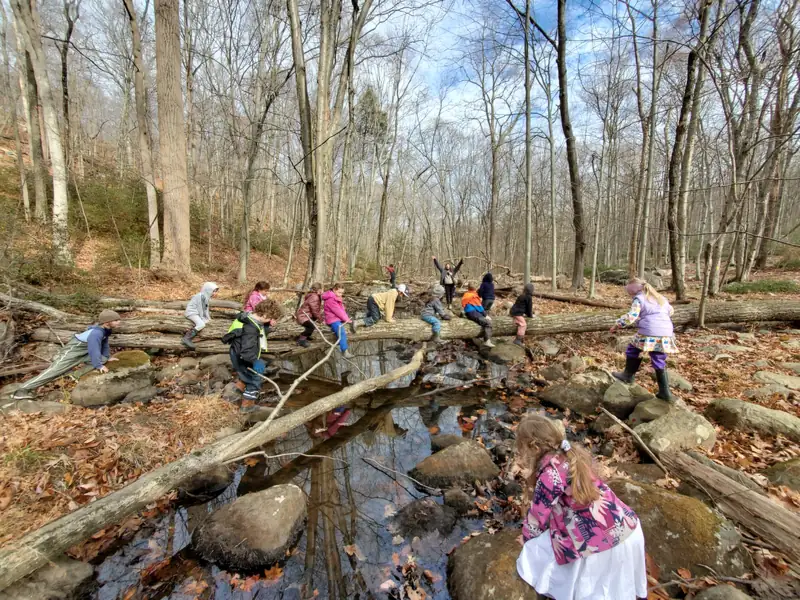
Our outdoor classroom is set in a landscape of forests, open meadows, and mountain trails. Older Junior Naturalists deepen their wilderness skills, lead independent inquiry projects, and step into mentorship roles, in a setting that asks more of them every season.
- GroupAges 9 to 10
- Sessions12 to 13 weeks, Monday to Thursday, 9:30 to 2:30
- WhereOur forest site in Hewitt, NJ
In the program
What your child will do
1
Advanced wilderness skills
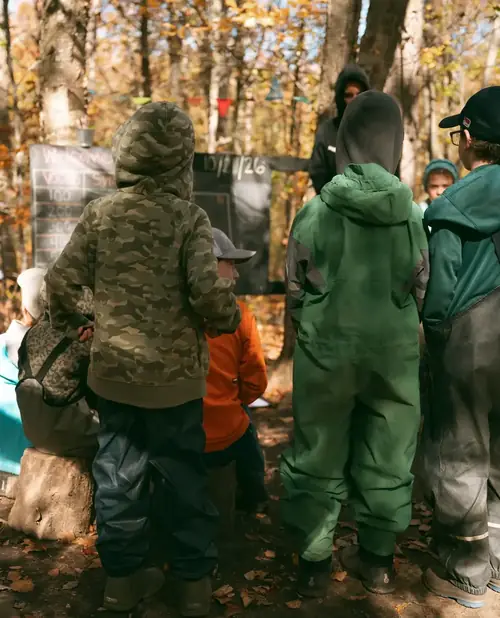
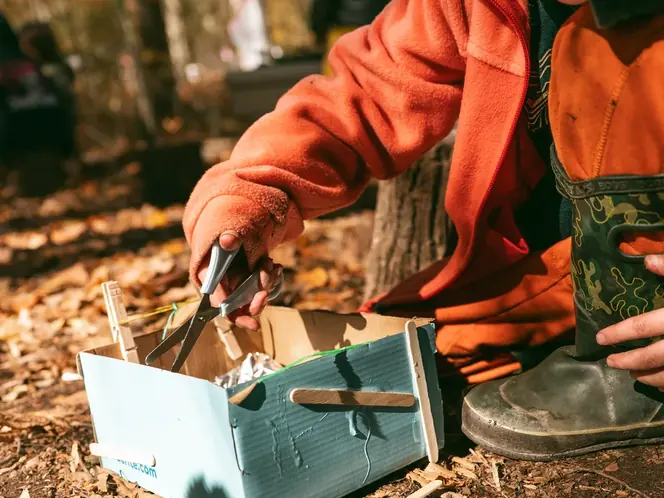
Junior Naturalist 2 students go deeper into the practical skills that make someone capable outdoors: fire craft, shelter building, knot work, map and compass navigation, and the safe use of knives, saws, and other real tools.
- Friction fire, shelter building, and knot work
- Map and compass navigation without screens
- Tool use with progressively more independence
- Wilderness first aid awareness
2
Ecological thinking
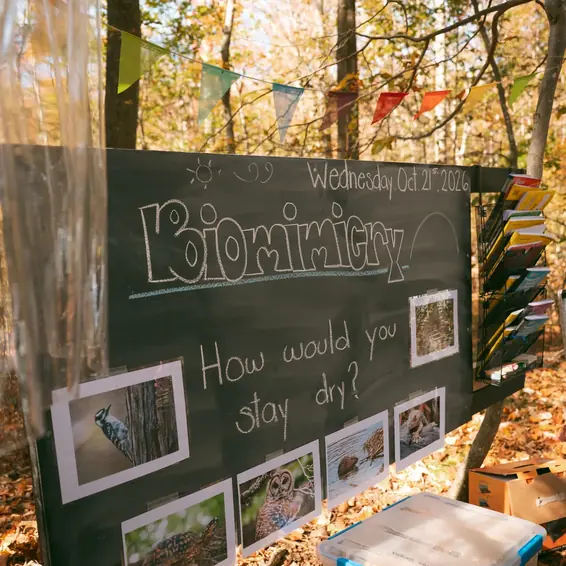
At nine and ten, children can hold complex ideas. This year introduces food webs, ecological succession, watershed dynamics, and the relationships between species and landscape, not as facts to memorize but as patterns to notice.
- Systems thinking introduced through real ecosystems
- Watershed, forest, and meadow studies
- Long term observation projects across seasons
- Field journals used as research tools
3
Independent field projects
Each student chooses a season long inquiry project, such as tracking a local bird population, mapping a stream, or monitoring a patch of forest. They plan, observe, document, and present their findings to peers and families.
- Student chosen, educator supported research
- Long form observation across weeks or months
- Final presentations to community and family
- Real practice with the scientific method
4
Mentorship and leadership
These are the big kids on the trail. They take regular turns mentoring Sprouts, Saplings, and Pioneers on shared outings, building empathy, patience, and real leadership while reinforcing their own learning.
- Regular mentorship with younger programs
- Coaching, not just modeling
- Increased responsibility for group routines
- Confidence built by helping others succeed
★★★★★
This is by far the most amazing forest school program. My homeschool children have thrived by attending. The woman who founded Sensory Garden and Play is so knowledgeable and kind. She knows each child enrolled personally and their strengths and interests.
★★★★★
Each child is treated with respect, kindness & individualized care, in turn teaching them to treat people the same.
Every age group
Find the right group
Three steps to your child's first day
1
Book a tour
Visit the forest site, meet our educators and ask your questions. Send us a note or call (201) 213-4072 to set a time.
2
Register
When you are ready, complete registration for the program and the days that suit your family.
3
First day
Pack using our family checklist and join your group in the woods. Our educators help new children settle in with familiar routines.
Come see this group in the woods
Book a time to walk the forest site with us. We are happy to talk through whether this group is the right fit for your child.